Living on the Frontline: How Metal Shutters Transform High-Traffic Exposure Into Architectural Advantage
Photo: Photographer not named., Public domain, via Wikimedia Commons
There is a particular tension that comes with owning an industrial-modern home on a busy American street. The property commands attention — its exposed steel, oversized windows, and unapologetic materiality make it a landmark against a backdrop of conventional facades. But that same visibility invites scrutiny. Pedestrians slow their pace. Commuters glance inward at red lights. The home that was designed to feel expansive can begin to feel uncomfortably transparent.
For a growing number of homeowners navigating this paradox, the answer has arrived not through curtains or privacy film, but through the very material that defines their architectural identity: steel. Specifically, metal shutters — deployed with deliberate intention — are proving to be among the most effective tools available for managing exposure along high-traffic corridors while preserving, and in many cases amplifying, the industrial character of the home itself.
The Street-Facing Problem Nobody Discusses at the Design Stage
Urban industrial properties are frequently celebrated in architectural publications for their commanding presence. What those features rarely address is what it actually feels like to inhabit a glass-and-steel structure on a street that never quiets.
In cities like Chicago, Portland, and Brooklyn, former warehouse conversions and purpose-built industrial-modern residences routinely occupy lots that front arterial roads — streets that once served commercial and light industrial uses before residential development moved in. The zoning may have changed. The traffic patterns have not.
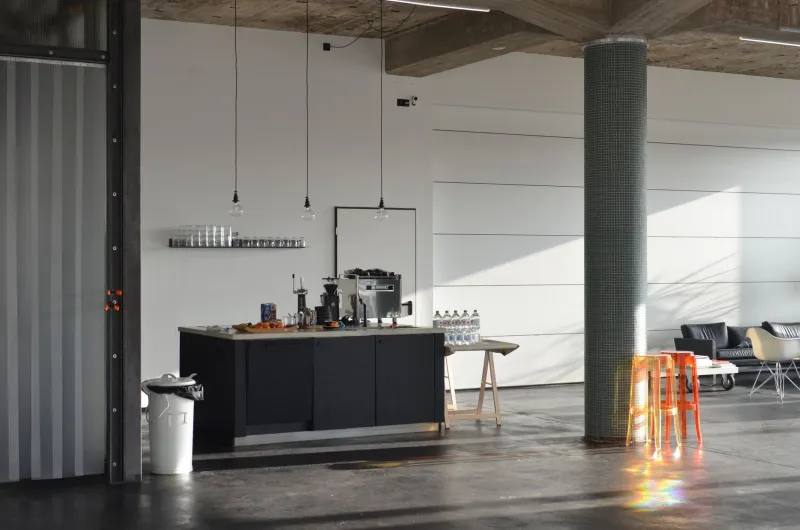
Homeowners in these situations describe a consistent experience: the initial thrill of the open, light-filled interior gradually gives way to a creeping awareness of constant observation. Large street-facing windows, a signature feature of industrial design, become a liability when foot traffic is dense or when the property sits at a busy intersection. The home that was meant to feel like a refuge begins to function more like a fishbowl.
This is what might be called the visibility trap — the condition in which the very features that make an industrial home architecturally compelling are the same features that erode the privacy and calm of daily life within it.
Steel as a Strategic Screen
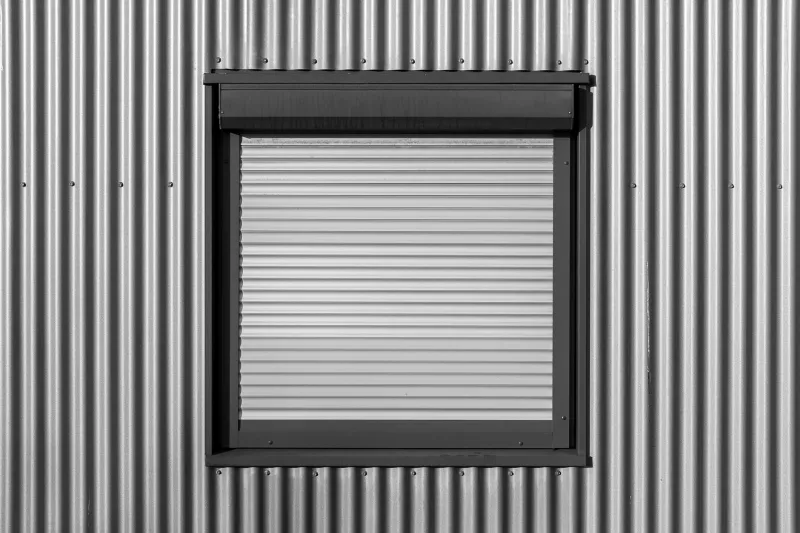
Metal shutters address this problem at the source. Unlike soft treatments — blinds, drapes, interior screens — shutters engage with the exterior environment directly. They do not merely filter light from inside; they redefine what the building presents to the street.
When deployed across street-facing window openings, metal shutters create a physical and visual boundary that is unambiguous without being hostile. The effect is one of deliberate closure — a building that has chosen, architecturally, to turn inward. In industrial-modern design, this reads not as a defensive measure but as a formal gesture, consistent with the language of the building itself.
The material coherence matters enormously here. A corrugated steel shutter on a raw concrete facade does not interrupt the design narrative — it continues it. The same impulse that led a homeowner to expose the structural columns, leave the ductwork visible, and pour a polished concrete floor is the same impulse that makes a steel shutter feel inevitable rather than retrofitted.
Case Perspectives: How Homeowners Are Using Shutters to Reclaim Sightlines
Consider the approach taken by owners of a converted printing facility in a mid-sized Midwestern city, now operating as a private residence on a street that carries significant daily commuter traffic. The building's original fenestration — wide, industrial-grade windows positioned low on the facade — offered extraordinary natural light but also created an almost complete visual connection between the interior living spaces and the sidewalk.
The owners worked with their architect to install a series of perforated steel shutters on a track system along the building's primary street elevation. When fully extended, the shutters present a unified steel surface to the street, maintaining the building's industrial character while eliminating the sightline entirely. When retracted, the windows perform as intended. The transition takes seconds. The effect is complete.
In a separate project documented in the Pacific Northwest, a purpose-built industrial-modern home on a corner lot in a walkable urban neighborhood used angled shutter panels to manage sightlines selectively. Rather than blanket coverage, the shutters were positioned to deflect views from the primary pedestrian flow while preserving lateral light. The result was a nuanced solution: interior spaces that remained bright and airy while the most direct lines of visibility from the street were interrupted.
Both approaches share a common logic. The goal is not to seal the home off from its context but to give the occupants agency over their relationship to that context — to convert exposure from a passive condition into an active choice.
The Acoustic Dimension of Street-Facing Shutters
Privacy along a busy corridor is not purely a visual concern. Traffic noise, the ambient sound of foot traffic, and the irregular percussion of urban life penetrate even well-insulated structures. Metal shutters, when closed, add a secondary layer of mass to window openings — and mass is among the most reliable variables in sound attenuation.
This is not an incidental benefit. For homeowners on high-traffic streets, the acoustic performance of a closed shutter system can meaningfully reduce the intrusion of exterior noise into interior spaces, particularly in rooms where the shutters cover large glazed areas. The steel panel, even without specialized acoustic treatment, interrupts sound transmission in ways that fabric treatments simply cannot replicate.
The combination of visual privacy and acoustic buffering makes metal shutters a particularly well-suited solution for properties that face the specific challenges of urban arterial exposure — challenges that conventional window treatments were never designed to address at this scale.
Aesthetic Integrity Under Pressure
It is worth stating directly what makes this solution distinctive in the context of industrial-modern design: it does not require compromise. The homeowner who has invested in the authenticity of raw materials, honest structure, and undecorated surfaces does not need to introduce a foreign element to solve the visibility problem. The shutter is already part of the vocabulary.
This is a meaningful distinction. Many privacy solutions available to homeowners — interior shading systems, applied window films, planted screens — work against the aesthetic logic of an industrial property. They soften, obscure, or domesticate the very qualities that give the home its character. Metal shutters do none of these things. They extend the material conversation the building is already having with its surroundings.
For properties on busy American streets, where the pressure to compromise between exposure and livability is most acute, this alignment between function and form is not a luxury. It is the difference between a home that fulfills its design promise and one that quietly retreats from it.
Reclaiming the Interior on Your Own Terms
The visibility trap is real, but it is not permanent. For industrial-modern homeowners navigating the particular demands of high-traffic locations, metal shutters represent a solution that is structural, material, and deeply consistent with the design principles that drew them to this architectural language in the first place.
The street does not have to dictate the terms of how a home is experienced. With the right shutter system — properly specified, thoughtfully positioned, and honestly detailed — the occupants of even the most exposed urban property can determine precisely what the street sees, and precisely what they do not.